House Clearance Euston: Recycling and Sustainability Commitment
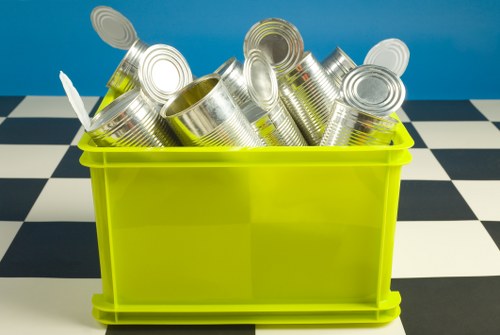 At House Clearance Euston we put the environment at the heart of every clearance. Our Euston house clearance teams operate with a clear focus on creating an eco-friendly waste disposal area and a robust, long-term sustainable rubbish area strategy for local households and landlords. We understand that house clearances can generate a wide range of materials — from furniture and textiles to electricals and construction waste — and we design our service to maximise reuse and minimise landfill.
Our approach to house clearance in Euston aligns with the wider borough policies. We respect Camden and neighbouring boroughs' guidance on waste separation, including kerbside separates for glass, paper, food waste and residual items. By coordinating with local councils we make sure materials that are collected during an Euston clearance are processed in line with municipal sorting schemes and carrier requirements.
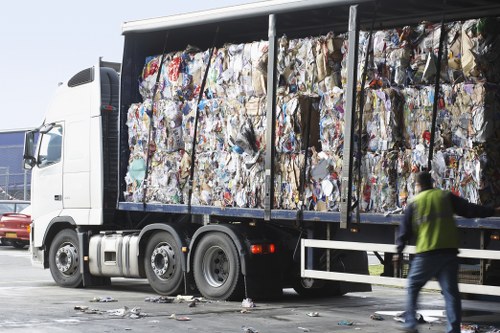 We have set a clear recycling percentage target for our clearances: an ambitious 80% recycling and reuse rate across all jobs within the Euston area by 2027. That target covers material diverted to recycling facilities, items donated to charities and pieces refurbished for resale. To achieve this we follow a practical three-tier plan:
- Source separation: on-site sorting into reuse, recycling and residual streams;
- Partnership routes: maximise donations and transfers to charity partners and specialist recyclers;
- Responsible disposal: use licensed transfer stations and energy recovery plants only when recovery or recycling is not appropriate.
Local Transfer Stations and Responsible Routing
We route waste through recognised local transfer stations and processing centres to maintain transparency and reduce transport mileage. Our preferred options include Camden borough amenity sites and accredited North London transfer centres that specialise in sorting mixed construction and household waste. These facilities allow us to increase the proportion of material that enters the recycling stream rather than going to landfill.In practice, this means we break larger clearances into material streams before transport so that glass, textiles, metal, wood, plasterboard and WEEE (waste electrical and electronic equipment) can be processed at the most appropriate facility. This nuanced handling helps meet local borough targets and complements Camden's waste-separation services.
Low-carbon vans and low-impact logistics
Our fleet is being upgraded to low-emission vehicles: a mix of electric vans, hybrids and Euro-6 diesel vehicles for heavier loads where necessary. These low-carbon vans reduce the carbon footprint of an Euston clearance, and we plan routes to minimise mileage and congestion. We also trial battery-electric tail-lift vans and use consolidated collections where multiple clearances in the same part of the borough are combined to reduce repeat journeys.We specialise in targeted recycling activities relevant to the urban context around Euston. Typical materials we handle include: furniture (reused or stripped for parts), textiles (sorted and sent to charity or recycling processors), glass and ceramics (separated for municipal streams), and WEEE (collected for specialist recycling). We also carry out safe plasterboard segregation for construction leftovers, and arrange for timber to be recovered or chipped for reuse where possible.
Partnerships with charities are a core part of our sustainability model. We work with local and national charitable organisations to ensure high-quality items are rehomed rather than discarded. Typical routes include donations to community centres, furniture banks, and charities supporting homelessness and low-income families. By prioritising donations we not only reduce waste but also deliver social value back into the Euston community.
To support transparency we maintain tracking and reporting on each clearance. Our internal audits break down materials by type and destination so we can report the percentage recycled, donated or responsibly disposed of. This data underpins continuous improvement and helps us move steadily toward our 80% recycling target.
We also emphasise training and on-site practices. Crews are trained to identify items suitable for charity, salvageable building materials and hazardous items requiring specialist handling. This reduces contamination and ensures that the sustainable rubbish area we create during a clearance remains effective — with clear signage and separated containers where needed to match borough separation schemes.
 Logistics and compliance are managed to the highest standards: all movements are recorded and consignment notes are used for controlled waste streams, including WEEE and hazardous materials. We work with licensed transfer stations and authorised reprocessors so that the life-cycle of materials recovered during Euston clearances is fully traceable.
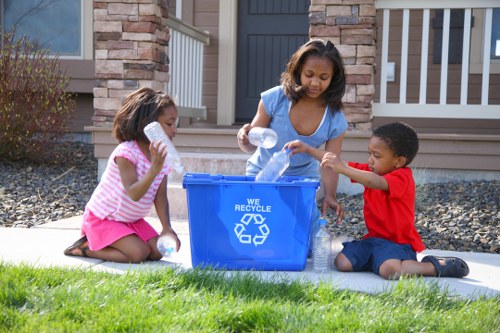 In summary, our Euston clearance services are built around practical sustainability: lowering transport emissions with low-carbon vans, maximising reuse via charities and social enterprises, routing materials to local transfer stations for correct processing, and tracking performance against an 80% recycling and reuse target. By combining these elements we create an effective and measurable eco-friendly waste disposal area and a lasting sustainable rubbish area for clients across Euston and the surrounding boroughs.